
Ear, Nose and Throat (ENT)
The Ear, Nose, and Throat Department (Otorhinolaryngology) (ENT) is a field of medicine concerned with the diagnosis and treatment of diseases of the outer ear, middle ear, eardrum, nose, throat, vocal cords, the upper part of the esophagus (pharynx), and facial nerves in all age groups, as well as pathologies located between the inner ear and the brain.
Nasal cavity and sinus problems, allergies, adenoid, tonsils, smell disorders, nasal breathing difficulties, hearing and balance disorders originating from the ear and/or inner ear, infections, diseases of the vocal cords and larynx, some speech and voice disorders, problems related to the upper part of the esophagus, swallowing and breathing disorders, and oncological diseases of the region are evaluated within the ENT specialty.
ENT diseases can cause a wide variety of complaints and symptoms. The main ones are:
- Dizziness
- Burning, itching, and watering in the eyes
- Sneezing
- Nasal discharge, itching
- Nosebleeds
- Ear pain
- Tinnitus, ringing
- Hearing loss
- Discharge from the ears
- Sore throat
- Loss of voice
- Jaw pain
- Excessive snoring causing frequent awakenings
- Cough
- Headache
- Fever
In the presence of these symptoms, it would be appropriate to consult an ENT specialist.
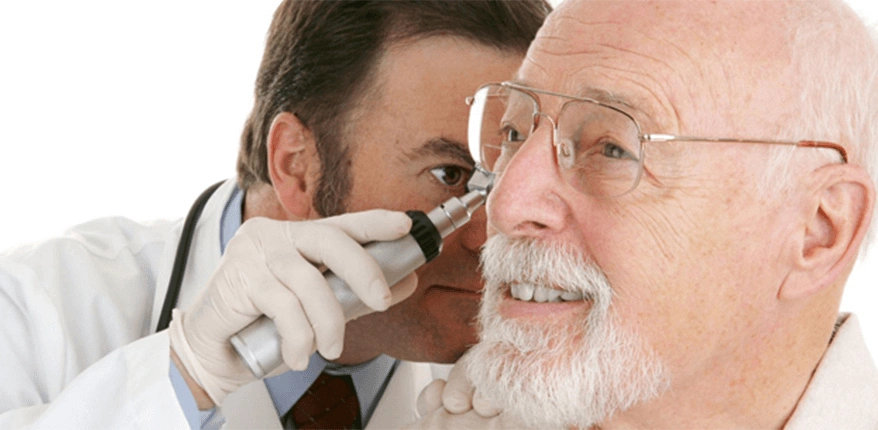
In our hospital’s ENT unit, which provides services in accordance with international standards, routine ENT examinations are performed by our specialist staff using nasal endoscopy, endoscopic and microscopic otoscopy, and videolaryngoscopy for disorders related to the larynx and voice.
In addition, in the Audiology and Neurotology Laboratory, pure tone and speech audiometries, acoustic reflex measurement, acoustic and static impedance measurements, brainstem audiometry (BERA), and newborn hearing tests (otoacoustic emission) (OAE) are performed for the evaluation of all types of hearing disorders.
All medical and surgical treatments are planned and carried out within the framework of evidence-based medicine. Some of these treatments are:
- Functional nasal surgeries (Rhinoplasty, Septorhinoplasty, SRP)
- Correction of the nasal septum (Septoplasty, SMR)
- Thermal welding method for adenoid, tonsil, insertion of ear tubes (Adenoidectomy, Tonsillectomy, Ventilation tube insertion)
- Snoring, Sleep Apnea Surgery (UPPP)
- Radiofrequency application to nasal concha (Inferior turbinate RF)
- Radiofrequency application to the soft palate
- Removal of small facial lesions with radiofrequency
- Endoscopic Sinus Surgery (FESS)
- Biopsy of the vocal cords, surgery for nodules, cysts, polyps, edema (Laryngoscopy, MLS)
- Removal of the larynx and neck lymph nodes (Laryngectomy, Neck Dissection)
- Repair of the eardrum (Tympanoplasty)
- Observation of the middle ear and ossicles, placement of a prosthesis (Exploratory tympanotomy, Stapedectomy)
- Middle ear surgery (Mastoidectomy, Tympanomastoidectomy)
- Parotid gland surgery (Parotidectomy)
- Submandibular gland surgery (Submandibular gland excision)
- Removal and aesthetic reconstruction of benign or malignant masses of the face and neck
- Repair of lower and upper jaw fractures (Mandibular and maxillary fracture repair)
In addition, treatments for adenoid and tonsil problems and allergies, which cause difficulty in breathing, snoring, recurrent infections, and hearing loss in childhood, are carried out in coordination with our hospital’s pediatrics departments.
In recent years, significant advances have been made in the treatment of these diseases, which have long posed diagnostic and therapeutic challenges. Adenoid and tonsil surgeries are performed using a new method called thermal welding. In light of all developments in both rehabilitation and surgical treatment, patients presenting with these complaints are treated.
Balance Test
Balance tests, or vestibular tests as they are medically called, are tests used to determine whether the problem in patients with dizziness (vertigo) originates from the inner ear or from other causes.
The body’s balance is maintained by the combination in the balance center of signals sent to the brain from a total of six balance canals (three in each inner ear) together with signals from the eyes, muscles, and joints. A malfunction at any stage of this complex system causes the condition we call dizziness (vertigo).
Although the term “vertigo” is often used as a disease name, it is actually the name of a symptom. There are many diseases that cause this symptom.
Balance tests are used to determine whether the problem in patients experiencing dizziness (vertigo) is of inner ear origin or due to other causes. Vertigo patients are basically divided into two groups: those of inner ear origin (peripheral) and those covering all diseases other than inner ear balance canal disorders (central). The important thing is to determine which disease is causing the symptom. Balance tests make it possible to differentiate between diseases very quickly and, if the disease is of inner ear origin, to provide faster and more accurate diagnostic information.