
Adult Bone Marrow Transplantation Center
What is Bone Marrow Transplantation?
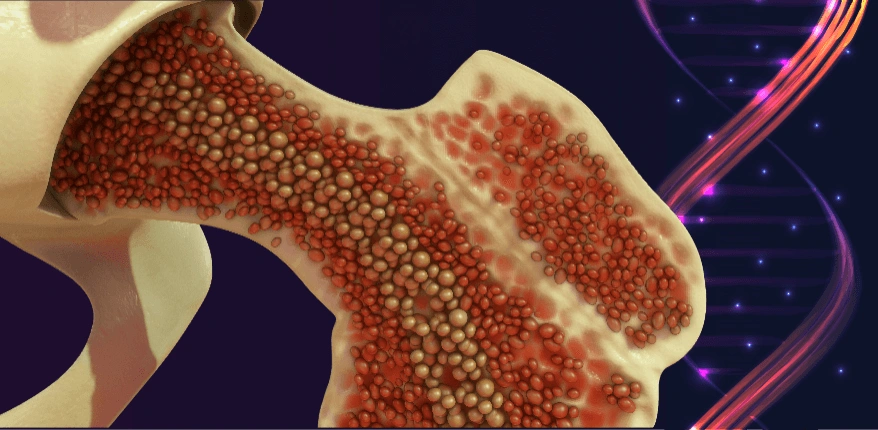
The “stem cells” located in the bone marrow are responsible for the production of blood cells in the body.
When the bone marrow is damaged or loses its function, the process of collecting new stem cells from various sources and reintroducing them into the body via the bloodstream is called “bone marrow transplantation.”
The person from whom the stem cells are collected is called the donor, and bone marrow transplants are classified according to the donor:
Autologous Transplant:
The donor is the patient themself. The stem cells collected from the patient are frozen and, after certain procedures, are transplanted back into the patient. The aim here is to reset and restart the bone marrow, which is damaged by high-dose chemotherapy and/or radiotherapy given for treatment. Multiple myeloma, Hodgkin’s lymphoma, non-Hodgkin’s lymphoma, and acute myeloid leukemia are among the diseases in which autologous transplantation can be performed.
Allogeneic Transplant:
The donor is another person. In this option, the stem cells to be given must be tissue-compatible (HLA-matched) with the patient. The higher the degree of tissue compatibility, the greater the chance of success. An 8/8 or 10/10 match is considered a perfect match, while a 7/8 or 9/10 match is considered a good match. Therefore, due to genetic similarity, relatives are prioritized as candidates. Transplants from related donors are called “allogeneic related transplants.”
If no match is found among relatives, compatible donors are sought through national and international stem cell banks. This procedure is called an “allogeneic unrelated transplant.” Certain types of acute and chronic leukemia and lymphoma are important indications for allogeneic transplantation.
Haploidentical Transplant:
In cases where a fully matched donor cannot be found, transplantation from a first-degree relative (parent, sibling, child) with HLA incompatibility is called a “haploidentical transplant” or “partially matched transplant.” At least 50% compatibility is achieved.
How Are Stem Cells Collected? Does the Donor Suffer Any Health Risks?
Stem cells are obtained from the donor’s bone marrow or peripheral blood through minimally invasive methods. Prior to the procedure, the donor is given a 5-day treatment to mobilize the stem cells into the bloodstream. There are no early or late-term harmful effects of being a stem cell donor. In some cases, there may be mild stiffness at the collection site and general fatigue for a few days. The donor’s body replenishes the stem cells within a few weeks.
Post-Transplant Follow-Up
The most significant risk in all transplants is failure of the procedure—meaning the transplanted stem cells do not adequately engraft in the bone marrow. In such cases, the transplant procedure is repeated. Another undesirable outcome is recurrence of the disease despite transplantation. In such situations, new treatment protocols are implemented.
Additionally, after allogeneic transplants, a major complication is Graft Versus Host Disease (GVHD), where the donor’s strong immune cells attack the patient’s cells. This occurs in approximately 30–40% of related transplants and 50–60% of unrelated transplants and requires serious management.
After the transplant, the patient is kept under close observation in special rooms. After discharge, the patient must comply with routine outpatient follow-up programs. Initially weekly, the check-ups are later spaced to monthly and yearly intervals. Returning to normal working life may take about six months.
Adult Bone Marrow Transplant Center Team
- Prof. Dr. Serdar Bedii Omay
- Specialist Dr. Yakup Ünsal
- Dr. Muhammed Murati