
Orthopedics and Traumatology
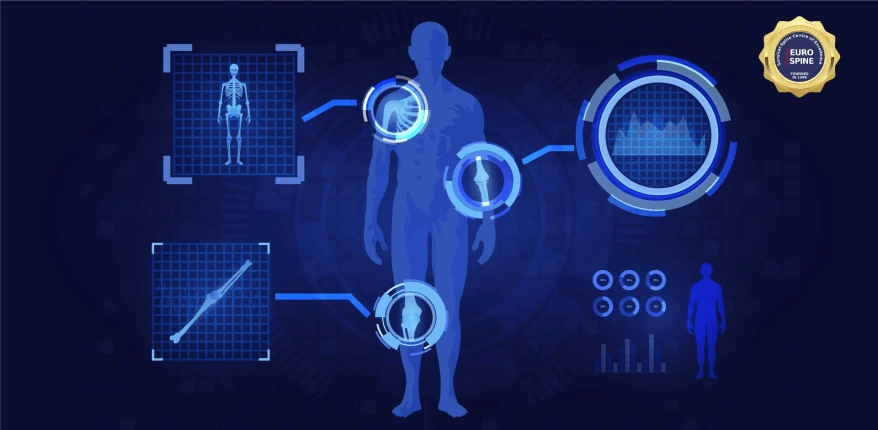
Orthopedics and Traumatology can be briefly described as dealing with diseases of the musculoskeletal system, or more precisely, the movement system. The term orthopedics covers non-traumatic problems of the movement system, while traumatology—as the name suggests—deals with movement system disorders that develop after trauma. In our department, we diagnose, monitor, and treat diseases related to all areas of orthopedics and traumatology.
In general, the areas of focus can be summarized as:
- Traumatology (musculoskeletal disorders after impacts, accidents, or injuries)
- Arthroplasty (joint prosthesis surgery)
- Arthroscopic surgery (minimally invasive surgeries for joint problems)
- Hand surgery and microsurgery (including reattachment of severed limbs)
- Spinal diseases and surgery
- Pediatric orthopedics (including congenital musculoskeletal disorders)
- Musculoskeletal tumor surgery
- Sports medicine
Spinal Diseases And Surgery
Spinal diseases and surgery are another area of focus. The most well-known conditions are spinal deformities and fractures. Spinal curvatures may be congenital or acquired. Fractures usually occur after high-energy injuries but can also result from osteoporosis or tumor metastasis. The nerves passing immediately behind the spinal bones—originating from the brain and extending to the movement system—make this region high risk. Our hospital successfully diagnoses and treats spinal diseases.
Traumatology
Traumatology treats musculoskeletal disorders resulting from common incidents such as impacts, falls, and traffic accidents. While fractures come to mind first, fractures of the facial bones are treated by the Plastic–Reconstructive and Aesthetic Surgery or ENT departments, skull fractures by Neurosurgery, and rib fractures by Thoracic Surgery. Not all traumas result in fractures—soft tissue injuries such as muscle, tendon, or ligament damage are also within the scope of traumatology. Being a surgical branch, our team successfully performs surgical interventions when needed.
Arthroscopic Surgery
Arthroscopy is the minimally invasive surgical diagnosis and treatment of joint disorders. It involves entering the joint with a pencil-sized camera and using other pencil-sized instruments through another small entry point. The main advantage is that no large incision is made, allowing patients to return to work earlier than with open surgery. It enables detailed functional evaluation of the joint capsule, ligaments, cartilage, tendons, and bones. While most common in the knee and shoulder, arthroscopy can also be performed on the elbow, wrist, hip, and ankle.
Arthroplasty
Arthroplasty refers to joint replacement surgery. Similar to dental prostheses replacing missing or damaged teeth, joint prostheses replace severely damaged joints, often due to cartilage degeneration from aging (commonly after age 40) or previous trauma. While knee and hip replacements are most common, prostheses are also available for the shoulder, elbow, ankle, wrist, and fingers. Joint prostheses should not be confused with limb prostheses used after amputations. After arthroplasty, patients are relieved of joint pain and regain mobility. Prostheses can last 15–20 years.
Musculoskeletal Tumors
Our clinic successfully diagnoses, treats, and monitors musculoskeletal tumors, which can be benign or malignant. These tumors are generally classified as soft tissue tumors or bone tumors. In addition to surgical treatment, chemotherapy or radiotherapy may be used when necessary.
Pediatric Orthopedics
Pediatric Orthopedics focuses on musculoskeletal disorders in children, which differ significantly from those in adults. In our country, congenital hip dislocation is a well-known example. Hip ultrasonography has revolutionized early diagnosis, allowing non-surgical treatments to be highly successful. This screening is routinely performed on all newborns in our hospital.
Hand Surgery – Microsurgery
Hand surgery covers conditions from the fingertips to the shoulder, not just reattachment of severed limbs. Microsurgery involves reconnecting tiny vessels and nerves under a microscope with very fine sutures and specialized instruments. It is not suitable for all amputations but can yield excellent results in selected cases. Our clinic treats fractures, nerve compressions, tendon and muscle injuries, and other disorders in the upper extremity.
Sports Medicine
Sports medicine deals with musculoskeletal injuries in athletes. Accurate diagnosis, treatment, and rapid rehabilitation are critical to shortening the return-to-sport time. In some cases, only surgical treatment allows athletes to resume their sports.
Joint Prostheses (Arthroplasty Applications)
Hip Prosthesis (Arthroplasty):
Performed when the hip joint is damaged due to idiopathic osteoarthritis or known causes such as childhood hip dislocation, hip fractures/dislocations, medication-induced necrosis, or Perthes disease.
Knee Prosthesis (Arthroplasty):
Performed for degenerative arthritis, rheumatic diseases, steroid-induced bone necrosis, fractures involving the knee, or to correct knee deformities.
Spina Bifida
A congenital spinal defect resulting from improper closure of the spinal cord and vertebral bones during fetal development (usually in the first trimester). It may later cause scoliosis or lumbar kyphosis.
Symptoms:
- Hair tufts on the skin
- Birthmarks
- Abnormal skin protrusions
- Leg weakness or paralysis
- Bladder/bowel control problems
- Cerebrospinal fluid buildup (hydrocephalus)
- Motor development problems
- Learning difficulties
- Scoliosis
- Inability to stand upright or perform self-care
- Inability to sit independently
- Lumbar kyphosis (hunchback)
- Compression of internal organs due to spinal curvature
Treatment:
Depends on severity. Mild cases may be managed with monitoring and physical therapy; severe cases may require surgery to close the spinal defect and protect the nerves. If scoliosis develops, spinal fusion or growth-friendly surgeries may be needed. Physical therapy and rehabilitation may also be required.
Unilateral Biportal Endoscopic (UBE) Spine Surgery
A modern minimally invasive technique for spinal diseases, using only two small incisions to access spinal structures.
Conditions Treated:
- Lumbar disc herniation
- Spinal stenosis
- Nerve compression
Advantages:
- Less pain and faster recovery
- Small incisions
- Lower complication risk
- Shorter hospital stay
- Precise intervention with wide visualization
Full Endoscopic Disc Surgery (Minimally Invasive Surgery)
An innovative technique for spinal disorders, providing direct access to internal spinal structures using an endoscopic camera and specialized instruments.
Conditions Treated:
- Lumbar disc herniation
- Cervical disc herniation
- Spinal canal stenosis
- Nerve compressions
Advantages:
- Small incisions
- Muscle and tissue preservation
- Rapid recovery
- Less pain
- Low complication risk