
In Vitro Fertilization (IVF) Unit
What is Infertility?
Infertility is generally defined as the inability to achieve pregnancy after one year of regular, unprotected sexual intercourse.
When Should Medical Assistance Be Sought?
In a healthy couple wishing to have a child, pregnancy is expected to occur within one year under normal circumstances. After this period, a doctor can be consulted for medical support. However, in the cases listed below, couples who cannot conceive should see a physician without waiting for the one-year period.
Women
- Over the age of 35
- Menstrual irregularities or amenorrhea (absence of menstruation), severe dysmenorrhea (painful menstruation)
- History of pelvic infection, previous abdominal surgery, complicated appendicitis
- History of more than two miscarriages
- History of sexually transmitted infections
Men
- History of testicular surgery, testicular injury, or infections affecting the testicles (e.g., mumps during childhood)
- Sexual dysfunction and/or erectile dysfunction
- History of sexually transmitted infections
What Are the Treatment Methods?
Assisted reproductive techniques and processes during these treatments can be summarized as follows:
- At the first consultation, it is recommended that both partners visit the physician together. After the examination, the physician may request certain tests to confirm the diagnosis and provide detailed information on treatment options.
- Following the diagnostic process, the most suitable treatment options are determined based on specific medical needs.
In Vitro Fertilization (IVF)
In this method, eggs stimulated with hormonal medication are retrieved from the mother-to-be under anesthesia once they have reached the appropriate size and maturity. The collected eggs are placed in a special solution and kept in an incubator that mimics the uterus.
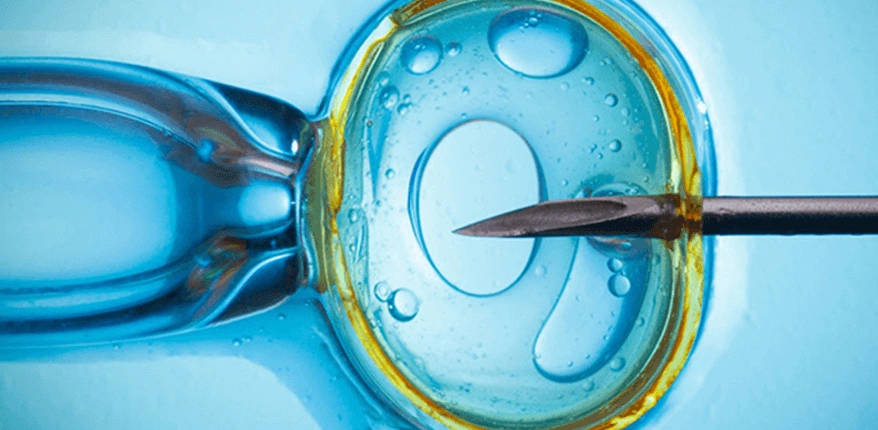
Meanwhile, sperm obtained from the partner is processed in the laboratory, and fertilization of the mature eggs is achieved under a microscope. If the sperm count is too low to ensure fertilization, intracytoplasmic sperm injection (ICSI) can be performed manually in the laboratory.
Following the procedure, the fertilization and division of the eggs are closely monitored. The best-quality embryos are selected within 2–5 days and transferred into the uterus through a fine catheter. The number of embryos transferred depends on the mother's age, embryo quality, and previous attempts, and is regulated by legal and ethical guidelines in many countries.
Hormone Therapy
Hormone therapy is used in patients with irregular ovulation (such as irregular menstruation) to stimulate egg release. Hormonal support to mature the egg can increase the likelihood of pregnancy.
Intrauterine Insemination (IUI)
During the woman’s ovulation period, sperm that has been specially prepared and processed in the laboratory is injected directly into the uterus by the physician using special equipment.
This procedure increases the chance of pregnancy by placing the sperm closer to the site of fertilization (fallopian tubes). Selecting the healthiest and most motile sperm and combining it with hormonally stimulated ovulation further improves success rates.
Minimally Invasive Surgery
In some cases, infertility is caused by a mechanical obstruction. For example, partial or complete blockage of the fallopian tubes may prevent fertilization. Similarly, scar tissue in the uterus or the presence of endometriosis may impair implantation.
In such cases, laparoscopic surgery can be used to remove structural or mechanical problems, which may improve fertility.
Reproductive Endocrinology
Certain endocrine (hormonal) disorders in either partner can cause infertility. Resolving these issues may be necessary—or even sufficient—for pregnancy to occur. After conception, monitoring these conditions throughout pregnancy is essential for a healthy birth.
If an endocrine problem is detected, obstetricians may refer patients to an endocrinologist for appropriate follow-up.
Other In Vitro Treatments
In Vitro Maturation (IVM)
Instead of allowing eggs to mature inside the body with hormonal stimulation, immature eggs are collected and matured in the laboratory for 24–48 hours. After fertilization, they are transferred to the uterus as in traditional IVF.
Intracytoplasmic Sperm Injection (ICSI)
Used when sperm-related issues prevent fertilization. A single healthy sperm is selected and injected directly into the egg under high magnification. Several embryos are obtained in this way, and the rest of the process follows the standard IVF procedure.
Other Methods
Embryo Freezing
If good-quality embryos remain after the appropriate number has been transferred, they can be frozen for future use. In case pregnancy is not achieved or a second child is desired, these embryos can be thawed and transferred to the uterus.
Sperm and egg freezing are also successfully applied to preserve fertility for the future.
Preimplantation Genetic Diagnosis (PGD or PGT)
This procedure examines the chromosomes (genetic structure) of an embryo before it is transferred to the uterus. It is especially important for couples at risk of having a child with a genetic disorder or who are carriers of genetic diseases.
PGT is recommended for recurrent pregnancy loss, advanced maternal age, or couples with multiple unsuccessful IVF attempts.
Our IVF Team
Nihal TÜRK ÇELİK , M.D.– IVF Unit Director / IVF Specialist
Hamiyet ÖZCAN M.D. – Anesthesiology and Reanimation Specialist
M.Sc. Medical Biologist Özge Özcan / IVF Director / Laboratory Supervisor
Medine Artoğral / IVF Laboratory Technician