


Hair Transplant Center
What Is Hair Transplantation?
Hair transplantation is a micro-surgical procedure in which healthy hair follicles (grafts) from areas resistant to hair loss—such as the nape of the neck—are extracted and transplanted to areas where the hair has fallen out or thinned. Among modern hair transplant methods, DHI (Direct Hair Implantation) offers the advantage of unshaven transplantation, allowing patients to return to their social life quickly with natural and healthy results. In this technique, hair follicles are individually extracted and directly implanted into the designated area using a special pen. The procedure is performed under local anesthesia in a sterile environment.
Who Can Have It?
- Those experiencing hair loss, especially male pattern baldness
- Women with thinning hair
- Those who have lost hair due to accidents, burns, or surgical scars
- Individuals dissatisfied with the appearance of their hair, eyebrows, or beard

Advantages
- Offers a permanent solution with denser implantation, less wastage, and more natural results
- Enables direct implantation without cutting hair
- Natural, as the patient’s own hair follicles are used
- Safe procedure performed under local anesthesia
DHI (Direct Hair Implantation)
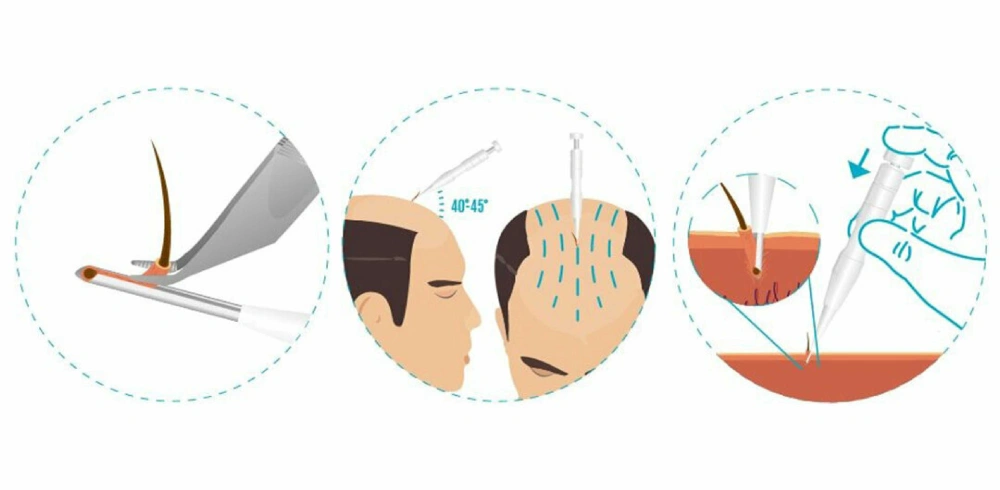
DHI technique is one of the most preferred methods due to its many advantages. Grafts are implanted directly into the bald area using a special pen (Choi Pen). These pens are known as “Choi” or “implanter.” This method makes it possible to transplant hair follicles from the donor area to the thinning area without opening channels. DHI pens allow for simultaneous channel opening and implantation. The goal is to obtain maximum efficiency from the transplantation process. Everyone expects to have thicker and stronger hair. The way to achieve this is by implanting the hair follicles without waiting. It is not possible to get high efficiency from follicles that have been kept waiting for a long time or delayed due to channel opening. The shorter the waiting time, the better the result.
Stages of Hair Transplantation
1- Preliminary Examination and Planning
- Hair structure and type of hair loss are evaluated
- Donor area is examined
- The number of grafts to be implanted is determined
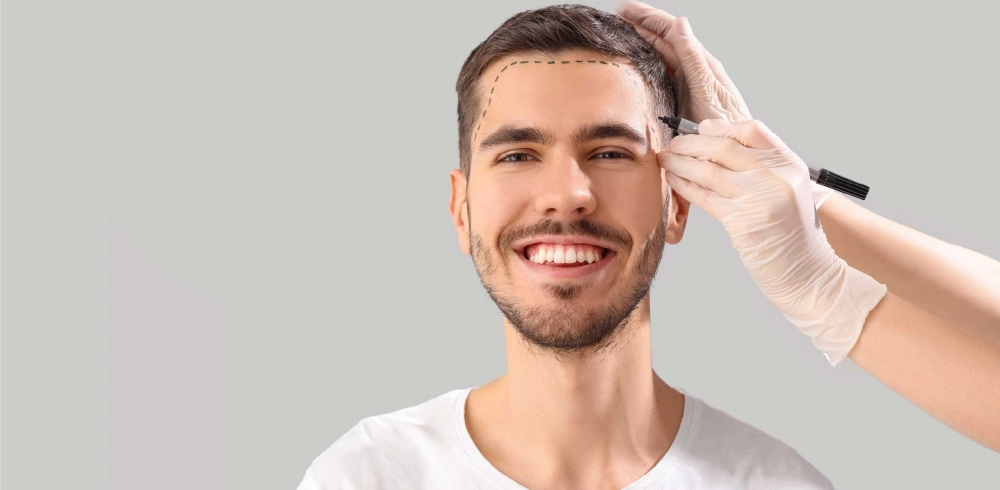
- A new hairline is designed
2- Preparation and Anesthesia
- Blood tests are performed
- Operation area is sterilized
- Pre-local anesthesia is applied with Dermojet
- Local anesthesia is administered
3- Harvesting the Grafts
- Hair follicles (grafts) are usually harvested from the nape area
4- Implanting the Grafts
- In DHI method, grafts are implanted directly without channel opening
What is Eyebrow Transplantation?
Eyebrow transplantation is the transfer of single, fine-caliber hair follicles taken from the nape or above the ear to the eyebrow area. In the DHI (Direct Hair Implantation) technique, grafts are placed directly using a sharp-tipped implanter pen without prior channel opening. The aim is to create permanent, natural-looking eyebrows with the right direction, angle, and density.
Who Is It Suitable For?
- People with thinning, trauma or burn scars, gaps after old tattoos or microblading
- Individuals born with sparse eyebrows
What Is Beard Transplantation (DHI)?
Beard transplantation involves directly placing follicular unit grafts (1–2 roots) taken from the nape or behind the ears into the mustache, sideburns, cheeks, jawline, and chin area using an implanter pen (DHI), without channel opening. The aim is to achieve a natural angle, direction, and permanent density.
Who Is It Suitable For?
- Those with genetic beard gaps or sparse areas
- Individuals with trauma, burn scars, or surgical scars
- Those with mustache or sideburn asymmetry
Post-DHI Supportive Applications
Autologous Micrograft Therapy
Autologous micrograft is the process of taking a few mini tissue samples from the nape or behind the ear, micronizing them in a special device, and turning them into a cellular suspension of the patient’s own, then injecting it into the transplanted or thinning area. The aim is to support graft adaptation and enhance the healing–regeneration capacity of the scalp.
How Is It Obtained?
- Collection: 2–4 small punch (≈2–3 mm) samples are taken under local anesthesia from behind the ear or nape area
- Preparation: These samples are mechanically micronized in a disposable container; cellular content around connective tissue, vascular niche, and follicular units is suspended
- Injection: The autologous cellular suspension obtained is applied to the transplanted area and its surroundings via multiple microinjections
What Are the Benefits?
- Supports graft adaptation and early vitality
- Optimizes healing process and tissue quality
- Enhances thickening potential of existing miniaturized hairs
- Helps reduce redness and swelling faster
Exosome Application
Exosomes are nano-vesicles secreted by cells (mostly mesenchymal origin culture cells) containing growth factors, cytokines, and miRNAs. After hair transplantation, they can be applied topically or via mesotherapy-style microinjections to support tissue healing and the follicular microenvironment.
What Are the Benefits?
- Supports healing response and tissue quality
- Helps reduce erythema and swelling faster
- Increases thickening potential of miniaturized hair strands
- Improves comfort during the post-transplantation period
Domestic Patient Package
- Hair transplant operation
- Stem cell therapy
- Post-op medications
- Dressing
- First wash set
- Scab shedding
- Routine follow-ups
International Patient Package
- Hair transplant operation
- Stem cell therapy
- PRP therapy
- Post-op medications
- Dressing (wound care)
- First wash set
- Scab shedding
- Routine follow-ups
- Translation services
- VIP transfer (airport–hospital / hospital–airport)
- Accommodation