

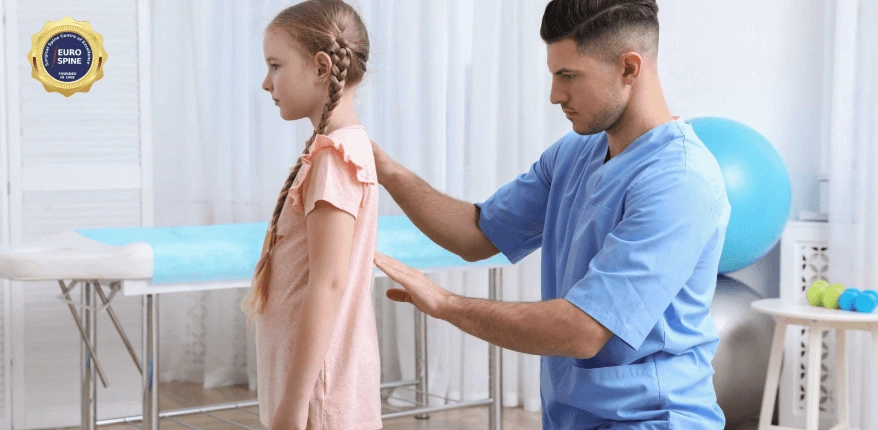
Spine Surgery and Rehabilitation
Spine and Scoliosis Rehabilitation
At our clinic, we offer comprehensive evaluation and treatment for individuals of all ages who experience spine-related problems—whether or not they have undergone spinal surgery. Our aim is to improve quality of life through behavior modification, preventive exercise strategies, and up-to-date therapeutic approaches for spinal disorders.
Our Services Include:
- 3D Schroth Therapy for Scoliosis
- Osteopathy (Manual Therapy)
- Personalized Functional Exercise and Rehabilitation Programs
The key to maintaining spinal health is to develop proper spinal habits that prevent overloading due to poor posture. Another essential element is adopting preventive strategies and exercises to avoid the onset of spinal diseases. Our spinal rehabilitation team plans your treatment with a patient-centered approach based on these two core principles.
All patients are thoroughly assessed by our spine specialists, including doctors and physiotherapists, to determine the most appropriate therapeutic plan.
Who Can Benefit from Spine and Rehabilitation Services?
- Kyphosis (hunchback)
- Scoliosis (spinal curvature)
- Postural disorders
- Neck, back, and lower back pain
- Coccydynia (tailbone pain)
- Sciatic nerve pain
- Cervical and lumbar hernias
- Spondylosis (degenerative arthritis)
- Spondylolisthesis (vertebral slippage)
- Spondylolysis (stress fractures in the spine)
- Spinal stenosis (narrowing of spinal canal)
- Post-traumatic spinal injuries
- Post-fracture rehabilitation
- Osteoporosis-related spinal issues
- Post-operative spine surgery cases (neurological or orthopedic)
- Individuals with posture/spinal issues due to cardiovascular, pulmonary, or vascular diseases
3D Schroth Method
The Schroth method, developed in 1921 by Katharina Schroth (a scoliosis patient herself), is a 3D exercise concept widely used worldwide. Based on the understanding that scoliosis is a three-dimensional deformity, the method aims to restore body balance across all planes and promote postural correction in daily life.
Key components of the method include:
- Rotational breathing
- Pelvic alignment
- Core stabilization
- Proper positioning
- Targeted mobilization, massage, stretching techniques
- Daily activity awareness with postural symmetry
Rotational breathing, which helps correct rib cage deformation, is one of the cornerstone techniques of the Schroth method and is personalized based on the curvature’s shape and direction.
Only physiotherapists specifically trained in the Schroth method can prescribe these customized exercises. Therapeutic positions are taught using supportive materials (towels, rice bags, blocks, etc.), and exercise progression is planned from basic to advanced levels.
We also organize seasonal Schroth Camps for small groups lasting several days.
Main Goals of the Schroth Method:
- Correct scoliotic/kyphotic posture
- Improve static-dynamic postural control and balance
- Enhance spinal mobility and post-surgical adaptation
- Promote home-based exercise compliance and postural habits
- Teach posture-specific breathing techniques
In adult scoliosis, where spinal growth has ceased, the Schroth method is especially effective in pain reduction and body awareness. Depending on whether the pain originates from scoliosis or another pathology, therapy may include Schroth, osteopathy, or physical therapy.
Following evaluation by our spine surgeons and therapists, an appropriate treatment plan is created.
This is a long-term therapy and continues with close follow-up, especially until the end of adolescence. Early diagnosis and intervention are critical in scoliosis; many cases can be treated without surgery if detected early.
Who Can Benefit from the Schroth Method?
The Schroth approach is suitable for scoliosis patients of all ages, including post-surgical cases.
Studies in the scientific literature have shown that the method:
- May prevent curve progression
- May reduce spinal curvature
- Reduces the need for surgery
- Helps relieve pain
- Improves vital lung capacity
Osteopathy (Manual Therapy)
Osteopathy is a holistic manual therapy method that targets musculoskeletal disorders—particularly involving joints, muscles, and the spine—while considering the body’s interconnected systems (nervous, circulatory, and lymphatic).
Introduced by American physician Andrew Taylor Still (1828–1917), osteopathy is now practiced by trained doctors and physiotherapists globally. Those who complete 5-year training programs earn the title Osteopath.
The goal is to facilitate the body’s self-healing potential (auto-regulation) by improving communication between systems.
Indications for Osteopathy in Spinal Health Unit:
- Musculoskeletal dysfunctions
- Acute and chronic spinal pain syndromes
- Nerve sensitivity in the neck and lower back
- Sciatica
- Cervical/lumbar herniated discs
- Postural disorders
- Post-spinal surgery rehabilitation
- Spondylolysis (stress fracture)
- Spinal stenosis
- Spondylosis (degeneration)
- Spondylolisthesis (slippage)
- Coccyx-related issues
How Many Sessions Are Required?
Typically, 3 to 6 sessions are recommended, varying by individual condition. Depending on the issue, sessions may range from once to three times per week or less frequently.
What Techniques Are Used in Osteopathy?
A wide range of manual techniques are selected based on patient needs, including:
- Joint mobilization and manipulation
- Soft tissue mobilization
- Myofascial release
- Nerve mobilization
- Kinesiology testing
- Reflex techniques
- Visceral manipulation
- Craniosacral therapy (targeting cerebrospinal fluid dynamics)