
Neurosurgery (Brain, Spinal Cord, and Nerve Surgery)
Surgical treatment of diseases of the nervous system and the surrounding structures is an extremely delicate and important matter. Finding a well-equipped and experienced center with a competent team is often of vital importance.
In the highly complex and wide-ranging field of brain, spine, spinal cord, and nerve surgery, our hospital’s Neurosurgery Unit works in collaboration with specialists in Neurology, Neuroradiology, Neuroanesthesia – Intensive Care, and Psychiatry.
Our Neurosurgery Unit is structured to provide 24/7 service using the latest technological means in the surgical treatment of brain, spine, spinal cord, and nerve diseases in both adults and all pediatric age groups from newborns onward. In the intensive care unit managed by an automation system, patients are meticulously monitored pre- and post-operatively, and treatments are coordinated with other relevant specialties. In this way, even the most complex cases can be fully treated within our hospital without the need to refer patients elsewhere.
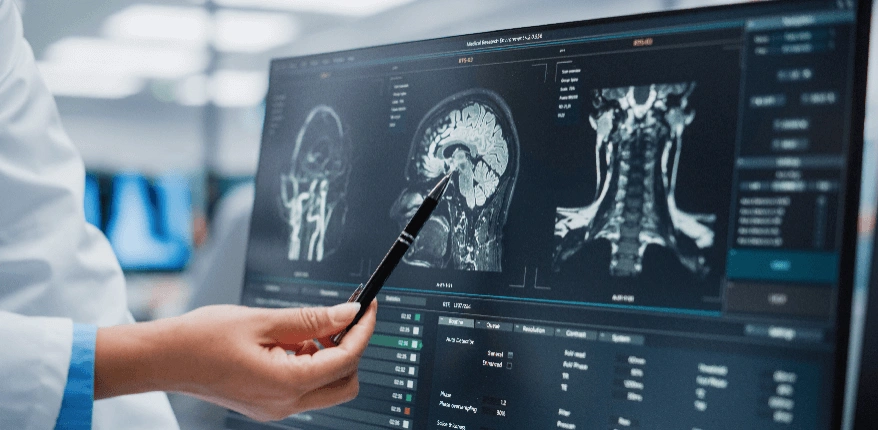
Angiography, Computed Tomography (CT), and Magnetic Resonance Imaging (MRI) are available 24/7. Our operating rooms are equipped with all types of neurosurgical devices (microsurgery, endoscopy, CUSA, etc.) and technical equipment made possible by the latest technological developments, allowing us to provide round-the-clock service in the areas listed below.
Epilepsy Surgery
- Microsurgical resection for lesion-related epilepsies
- Vagal nerve stimulator (VNS) implantation for drug-resistant non-lesional epilepsy
Peripheral Nerve Surgery
- Peripheral nerve anastomosis and microsurgical nerve repair after trauma
- Surgery for entrapment syndromes (carpal tunnel, ulnar groove syndrome, etc.)
Treatment Of Intracerebral Cysts
- Fenestration of arachnoid cysts (endoscopic or microsurgical techniques)
Functional Neurosurgery
- Stereotactic biopsy
- Deep brain stimulation (DBS)
- Intracranial pacemaker placement for movement disorders and Parkinson’s disease
- Tremor rehabilitation
- Hemifacial spasm and trigeminal neuralgia rehabilitation (balloon compression, radiofrequency, and microvascular decompression)
Surgical Treatment Of Congenital Skull Deformities
- All craniosynostosis surgeries (premature closure of skull bones) and craniofacial surgeries (deformities of skull and facial bones) requiring advanced expertise and experience
- Surgical interventions for skull lesions (tumors, cysts, etc.) and cranioplasty operations
Neuroendoscopy And Hydrocephalus Treatment
- Endoscopic third ventriculostomy (ETV)
- Ventriculoperitoneal, ventriculoatrial, and lumboperitoneal shunt surgeries
Vascular Surgical Diseases Of The Brain And Spinal Cord
- Surgical interventions for vascular diseases of the central nervous system, including intracerebral hematomas (brain hemorrhages), aneurysms, arteriovenous malformations (AVM), cavernomas, and cavernous angiomas
Neuro-Oncology
- Surgical treatment of all types of brain and spinal cord tumors
- Glial tumors, meningiomas, pituitary tumors (including minimally invasive endoscopic endonasal approaches), cerebellopontine angle tumors, posterior fossa tumors, brainstem tumors, pineal region tumors, skull base tumors, extramedullary and intramedullary spinal tumors
Spine And Spinal Cord Surgeries
- Cervical, lumbar, and thoracic discectomies
- Vertebroplasty and kyphoplasty
- Spinal canal stenosis surgery
- Stabilization (instrumentation) surgeries
- Spinal trauma (spine–spinal cord injuries)
- Spinal and spinal cord tumors
- All congenital spinal cord and spine anomalies (meningocele, myelomeningocele, tethered cord syndrome, spinal cysts, scoliosis, etc.)
Trauma
- Injuries to the skull, brain, spine, spinal cord, and nerves
- Epidural and subdural hematomas
- Depressed skull fractures
Unilateral Biportal Endoscopic (UBE) Spine Surgery
Unilateral Biportal Endoscopic (UBE) spine surgery is a modern minimally invasive surgical technique that enables direct access to spinal structures through only two small incisions.
Spinal Conditions Treated With UBE:
- Lumbar herniated disc
- Spinal stenosis
- Nerve compression
Advantages Of UBE Surgery:
- Less pain and faster recovery
- Smaller incisions
- Lower risk of complications
- Shorter hospital stay
- Precise intervention with wide visualization
Fully Endoscopic Disc Surgery (Minimally Invasive Surgery)
Fully Endoscopic Disc Surgery is an innovative minimally invasive surgical method used to treat spinal disorders. This technique allows direct access to the internal structures of the spine using an endoscopic camera and special instruments.
Spinal Conditions Treated with Fully Endoscopic Disc Surgery:
- Lumbar herniated disc
- Cervical herniated disc
- Spinal canal stenosis
- Nerve compressions
Advantages of Fully Endoscopic Disc Surgery:
- Smaller incisions
- Muscle and tissue preservation
- Faster recovery
- Less pain
- Low risk of complications