
Interventional Radiology
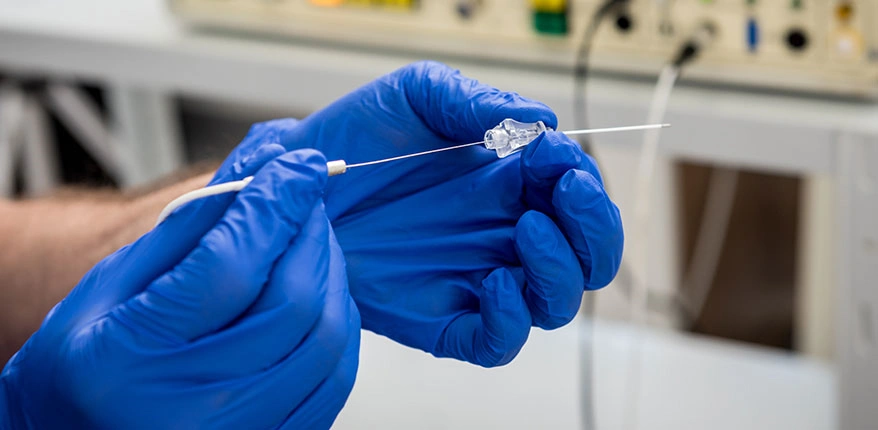
Our interventional radiology center, which is the therapeutic branch of radiology, assists many other clinical branches by applying the necessary treatment protocol using imaging devices such as angiography, computed tomography, ultrasonography, and magnetic resonance, through the use of special needles, wires, and catheters inserted into the vessels without creating a surgical incision.
Interventional procedures that do not require surgery are performed under local and sedation anesthesia, with the patient’s comfort prioritized, and medications are administered intravenously to relax the patient and prevent pain. In this way, patients can receive treatment comfortably without feeling any pain. In the procedures performed, high-tech devices are mostly used, and these materials are specially designed and produced for each procedure and purpose. With these painless methods, which carry very low risks, patients’ quality of life increases, hospital stays are shortened, and patients are discharged on the day of the procedure or usually the next day.
Specialized Procedures Performed in Our Center
In interventional radiology, biopsies can be taken from many organs such as the liver, breast, lymph nodes, and prostate; cysts and abscesses can be treated; blocked bile and urinary tracts can be opened; dialysis catheters can be placed; liver tumors, in particular, can be treated by burning them with special needles and medications. Brain aneurysms causing bleeding or vascular diseases leading to stroke can also be treated interventionally without opening the skull.
Main Procedures Performed In Our Center
- Tumor Marking
- Drainage Procedures: Kidney and Urinary Tract Interventions, Abscess Drainage
- Biopsies
- Intravascular Catheters: Placement of Dialysis Catheter, Port Placement
- PICC-Line Catheter Placement
- Vascular Treatments: Vascular Occlusion Treatment
- Diabetic Foot Treatment
- Intracranial Vascular Aneurysm Treatment
Oncological Treatments:
- Chemoembolization: A method in which chemotherapy drugs are administered directly into the tumor via a catheter by entering through the groin vessel and reaching the vessels inside the liver.
- Radioembolization: An application that destroys cancer cells with a dual effect by applying both radiation therapy and embolization simultaneously in the area where liver cancer is located.
- Radiofrequency–Microwave Ablation: A method that converts radiofrequency and microwave energy into heat to burn and treat tumors in the liver, lungs, bones, and kidneys.
Biliary Interventions:
Biliary interventions are minimally invasive procedures applied to treat narrowing, blockage, and injuries in the biliary ducts. Minimally invasive techniques are used in the treatment of inflamed or infected gallbladders.
Neuroradiological Treatments:
- Aneurysms in the vessels supplying the brain that cause bleeding can be treated by entering the vessel. Using metallic stents and coils, the aneurysms are blocked and bleeding is prevented.
AVM Embolization:
Arteriovenous malformations occur when the brain arteries open directly into the veins. These lesions can cause bleeding. By entering through the vessel, these dilated vessels that cause bleeding are closed using metal coils or liquid adhesives.
Carotid Artery Treatments:
By using metallic stents and balloons inside the vessel, narrow segments can be expanded to their normal size, reducing the risk of stroke.
Stroke Treatment:
A stroke occurs when a clot travels to the brain from the heart or neck vessels. With early intervention within the first six hours, it is possible to prevent neurological damage by removing the clot from inside the vessel.