
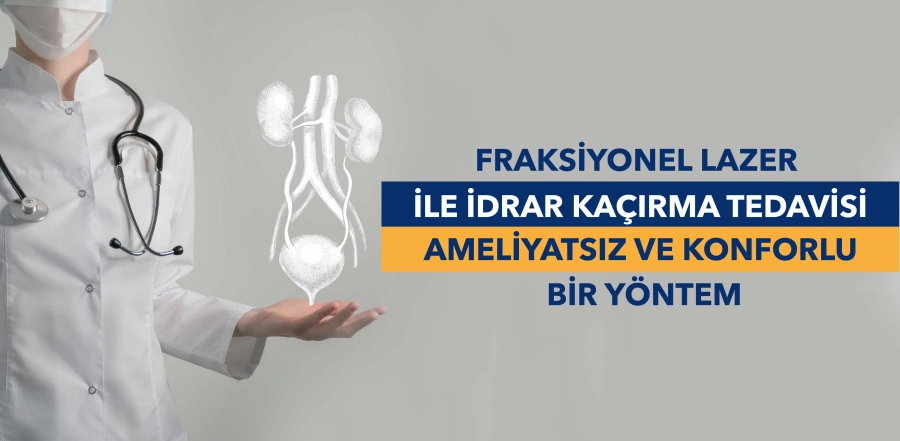
Fractional Laser Treatment for Urinary Incontinence: A Non-Surgical and Comfortable Approach
What Is Fractional Laser Treatment for Urinary Incontinence?
Urinary incontinence is one of the common health problems that may occur particularly in women who have given birth, entered menopause, or have weakened pelvic floor muscles. Thanks to advances in medical technology, different methods can now be used in the evaluation and management of urinary incontinence complaints.
One of these methods is fractional laser treatment. This method, which can be performed without requiring a surgical procedure, may be among the options preferred in some patients because it can be completed in a short time and the recovery period is generally quick. However, suitability varies for each patient and requires evaluation by a specialist physician.
What Is Fractional Laser Treatment for Urinary Incontinence?
Fractional laser is a technology that works on the principle of delivering controlled energy to vaginal tissues. In this application, the aim is to stimulate collagen production and support tissue regeneration through the effect of laser energy on tissues.
It may be considered as a supportive method in some patients, particularly for complaints of stress urinary incontinence, defined as urinary leakage that occurs during coughing, sneezing, laughing, or physical activity.
How Is Fractional Laser Treatment Performed?
The treatment is performed with the help of a special laser probe inserted into the vagina. During the procedure:
-
Laser energy is applied along the vaginal canal.
-
Collagen production is stimulated to support tissue regeneration.
-
The vaginal wall tightens, providing better support for the urinary tract.
Sessions generally last 15–20 minutes. The procedure is painless, does not require anesthesia, and patients can return to their normal daily activities immediately afterward.
Who May Be Suitable for Fractional Laser Treatment?
Fractional laser treatment is one of the methods that may be considered for some patients following medical evaluation. In general, a physician may assess its suitability in the following situations:
-
Women with mild or moderate stress urinary incontinence
-
People experiencing vaginal tissue laxity after vaginal birth
-
Individuals experiencing vaginal dryness and loss of elasticity after menopause
-
Patients who do not want surgery or are not suitable candidates for surgery
However, different treatment methods may be recommended in cases of severe prolapse or other types of urinary incontinence.
What Are the Advantages of Fractional Laser Treatment?
-
It is a non-surgical method that does not require stitches.
-
It is painless and comfortable.
-
It does not require anesthesia.
-
Daily activities can be resumed immediately after the session.
-
It also reduces other symptoms such as vaginal dryness, itching, and burning.
-
It improves the quality of sexual life.
Generally, 2–3 sessions are recommended, and effects may begin to appear after the first session. The effects may last 1–2 years, depending on the individual.
What Should Be Considered After Fractional Laser Treatment?
The recovery process after the procedure is quite fast. However, sexual intercourse should be avoided for 3–4 days, water should be prevented from entering the vagina, and antibacterial hygiene recommendations should be followed. Mild discharge and a sensation of warmth may occur after the laser procedure; these symptoms generally resolve spontaneously within 1–2 days.
Urinary incontinence is a health problem that affects women's quality of life but is often difficult to talk about. Thanks to advances in technology, this problem can now be effectively treated with non-surgical methods such as fractional laser. It is recommended that you be evaluated by an obstetrics and gynecology specialist to determine the appropriate treatment plan.
Emsey Medical Editorial Board