


What Is Jawline Filler? How Is Jawline Contouring Done?
What Is the Jawline?
The jawline refers to the outline formed by the jawbone and surrounding muscles at the lower part of the face. It significantly influences facial harmony and balance. Factors such as aging, weight fluctuations, or genetics may reduce its definition. In these cases, jawline fillers can restore volume and create a sharper contour.
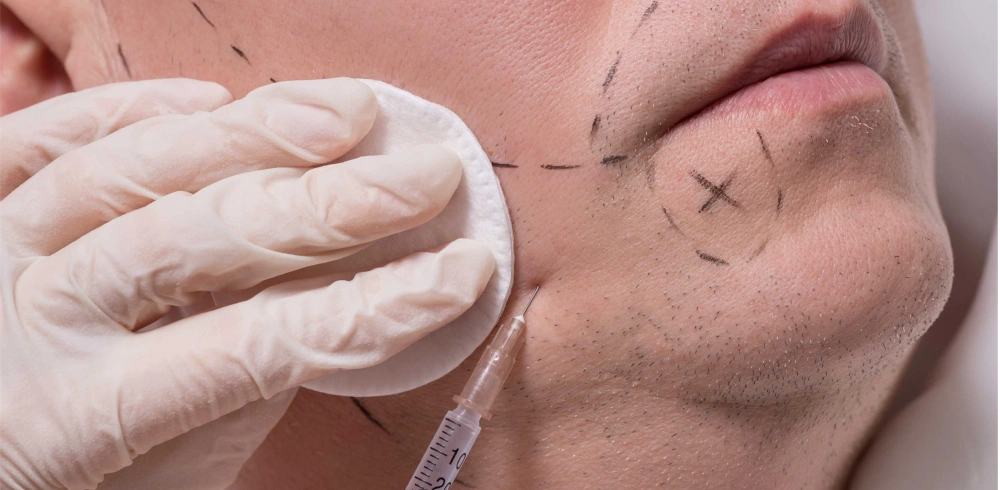
How Is Jawline Filler Performed?
Jawline contouring is usually performed with hyaluronic acid injections. After analyzing facial structure and applying topical anesthesia, filler is strategically injected with fine needles to define the jawline, improve symmetry, and balance facial proportions. The procedure typically takes 30–45 minutes, and patients can return to daily activities immediately. Post-treatment recommendations include avoiding sun exposure, excessive heat, and intense physical activity for a short period.

Types of Fillers Used
- Calcium Hydroxyapatite: Stimulates collagen production and improves firmness.
- Hyaluronic Acid: Hydrates and reduces fine lines, restoring volume.
-
Polymethyl Methacrylate (PMMA): Provides long-lasting structure and density.

Who Is a Candidate?
Jawline fillers are recommended for men and women with concerns such as:
-
Weak or receding chin
-
Jowl sagging or double chin
-
Neck wrinkles
-
Round face shape
-
Jawline asymmetry
-
Volume loss due to aging

Advantages & Disadvantages
Advantages:
- Immediate and natural-looking results
- Minimally invasive, non-surgical procedure
- Enhances facial symmetry and contour
- Helps correct wrinkles and early sagging
- Quick recovery, minimal downtime
Potential Disadvantages:
-
- Temporary swelling, redness, or bruising
- Rare allergic reactions or infection risks if performed in non-sterile environments
- Results typically last 12–18 months, requiring maintenance
For more details, contact the Emsey Hospital Dermatology Clinic.