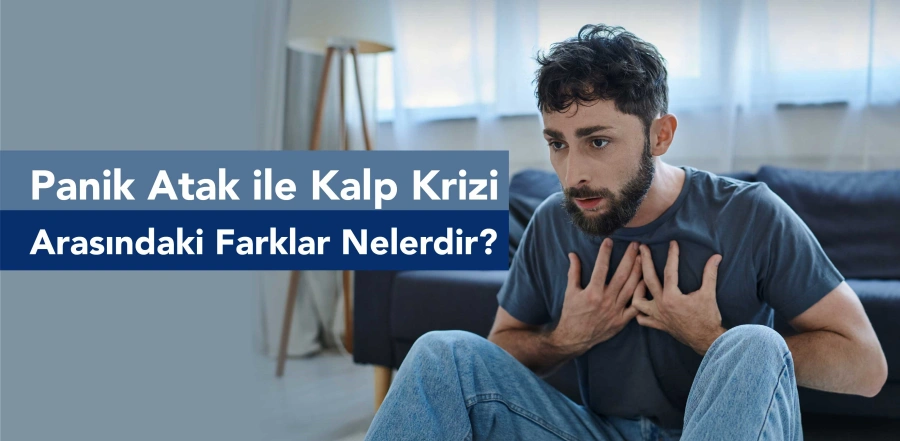
What Are the Differences Between a Panic Attack and a Heart Attack?
When you experience chest pain, palpitations, and shortness of breath, it can be difficult to determine whether you are having a panic attack or a heart attack. This is because the symptoms of panic attacks and heart attacks can overlap in some ways. People experiencing an episode for the first time may mistake it for a heart attack. However, the causes, duration of symptoms, and patterns of development differ between these two conditions.
Why Are Panic Attacks and Heart Attacks Often Confused?
Symptoms such as chest tightness, shortness of breath, palpitations, and intense fear can occur during both panic attacks and heart attacks. As a result, many people may have difficulty identifying the cause of their symptoms.
In particular, the intense fear of death that can occur during a panic attack may cause a person to perceive the situation as more serious. A heart attack, on the other hand, is a serious medical condition caused by a blockage in the arteries that supply blood to the heart and requires emergency medical attention.
What Is a Panic Attack?
A panic attack is an episode of intense fear and anxiety that begins suddenly and escalates rapidly. Even when there is no underlying physical heart condition, a person may interpret the symptoms they experience as a heart attack.
During a panic attack, a person may think that they are:
-
Having a heart attack
-
Unable to breathe
-
About to faint
-
Losing control
-
Going to die
What Are the Symptoms of a Panic Attack?
Panic attack symptoms typically intensify within a few minutes and reach their peak relatively quickly.
The most common symptoms include:
Symptoms often begin to subside within 20–30 minutes.
What Is a Heart Attack?
A heart attack occurs when the heart muscle does not receive enough oxygen because the coronary arteries that supply blood to the heart become severely narrowed or suddenly blocked. It is a serious, potentially life-threatening condition that requires prompt medical intervention.
What Are the Symptoms of a Heart Attack?
Heart attack symptoms can vary from person to person. However, common symptoms include:
-
Pressure in the center of the chest
-
Chest tightness or a burning sensation
-
Pain radiating to the left arm
-
Pain radiating to the jaw or back
-
Shortness of breath
-
Cold sweats
-
Nausea
-
Weakness
-
Dizziness
Symptoms may begin mildly in some people, while others may experience sudden and severe symptoms.
Key Differences Between a Panic Attack and a Heart Attack
1. Onset
A panic attack usually begins suddenly and reaches its highest intensity within a few minutes. Heart attack symptoms may develop gradually and become progressively more severe, although they can also begin suddenly.
2. Characteristics of Chest Pain
During a panic attack, a person may experience sharp pain, tightness, or pressure in the chest.
During a heart attack, the following sensations are more commonly associated with chest discomfort:
Heart attack pain may radiate to:
-
The left arm
-
The shoulder
-
The neck
-
The jaw
-
The back
3. Duration
Panic attack symptoms generally begin to subside within 20–30 minutes. Heart attack symptoms may last longer and may not resolve on their own.
4. Emotional Symptoms
During a panic attack, the following may be particularly prominent:
-
Fear of death
-
Fear of losing control
-
Fear of going crazy
During a heart attack, physical symptoms are generally more prominent.
5. Relationship With Physical Activity
Heart attack symptoms may occur during or after physical exertion.
A panic attack, however, can begin:
Can a Panic Attack Cause a Heart Attack?
A panic attack does not directly cause a heart attack. However, during periods of intense stress, the heart rate may increase, blood pressure may rise, and palpitations may occur. These sensations can make a person feel as though they are having a heart attack.
Does a Panic Attack Show Up on an ECG?
Palpitations may occur during a panic attack. However, an ECG often does not show findings specific to a heart attack during a panic attack. A medical examination is important for an accurate assessment.
Can a Panic Attack Be Fatal?
Panic attack symptoms can be extremely frightening. However, a panic attack itself is not generally a life-threatening condition. Nevertheless, anyone experiencing chest pain, shortness of breath, or palpitations for the first time should seek medical evaluation.
When Should You Seek Emergency Medical Help?
Emergency medical attention should be sought without delay if any of the following symptoms occur:
-
Chest pressure or tightness
-
Pain radiating to the left arm
-
Pain radiating to the jaw
-
Severe shortness of breath
-
Cold sweats
-
Feeling faint
-
Changes in consciousness
These symptoms may be caused by either a panic attack or a heart attack. The two conditions can only be reliably distinguished through medical evaluation.
Conclusion
Panic attacks and heart attacks can share some symptoms. Chest pain, palpitations, and shortness of breath, in particular, may occur in both conditions. However, a heart attack is a medical emergency caused by a blockage in the coronary arteries, whereas a panic attack is associated with intense anxiety and fear.
If the cause of your symptoms is unclear, it is important to seek professional medical evaluation rather than attempting to diagnose yourself. In particular, anyone experiencing these symptoms for the first time should seek medical attention without delay.
Emsey Medical Editorial Board